There’s a number the solar industry would rather you didn’t see until a salesperson is sitting in your kitchen.
The price.
Not a rough ballpark or a “starting from” figure buried in the small print. The actual cost of a system on your actual roof, with your orientation, your roof pitch and any shade your roof might have. Everything is factored in.
For years, the only way to get that number was to book a home visit, sit through a sales presentation and wait nervously as they smash some keys on a calculator and then present you a figure that’s way off what you saw online.
So anyone who wanted to look into solar from the comfort of their own home, before letting a salesperson anywhere near the front door, had almost nothing tangible to work with.
And the guesswork that filled the gap was expensive. When you can’t find a real price, you fill in the blanks yourself, and the blanks tend to get filled with a couple of extra zeros on the end.
Talk to homeowners who’ve looked into solar but not yet committed and the same pattern shows up. Most put the cost of a standard residential solar system somewhere between £15,000 and £20,000.
The actual figure for a 12 to 14 panel solar system with battery, installed by a certified local company? More around the £9,000 mark.
That’s not a small difference. For most families, the gap between £9,000 and £18,000 is the gap between a purchase that makes sense on paper and one that gets shelved for another year. Not because the decision is wrong. Because the information was never there to make it.
That gap between what people assume and what solar actually costs is no coincidence. The industry built its whole sales process around keeping you in the dark until a rep could manage the conversation face to face.
A Carlisle company called Renewable Robin decided that wasn’t good enough.
The Research Trap Most Homeowners Fall Into
Plenty of people spend months trying to get a straight answer on what solar actually costs.
They shop around, filling in contact forms on installer websites and wait for a callback that takes days, or never comes. They ring direct and get told someone will be in touch to arrange a survey. Then it’s crickets. If they’re one of the fortunate ones, a call finally lands on day three or four, only to be told a rep needs to come round anyway. If only someone had said that in the first place. Comparison sites quote ranges so wide you could fit another year’s mortgage payments between them and still have room. Forums still pass around figures from four or five years ago as if they’re current.
Every path leads to the same place: a home visit. And the home visit isn’t where the research ends, it’s where the sales process begins.
The wasted time is annoying. What the information gap forces on you is worse. Without a real number you can’t have a proper conversation with your partner, you can’t compare anything meaningfully, and you can’t work out whether the timing suits your finances or set a budget. You’re stuck in the research revolving door, because every other company does exactly the same thing.
Most people who take their money seriously don’t want to sit through a home visit before they’ve seen a number. They want the figures first, time to think, and a chance to talk it over at their own kitchen table before anyone tries to persuade them that solar is definitely the way forward. That isn’t an unreasonable way to approach a purchase this size. It’s the sensible, grown-up way.
But the industry’s standard model makes it nearly impossible. Everything is built to funnel you toward a conversation before you have the information to have it on your own terms.
Renewable Robin built a tool that changes this.
What the Scan Actually Does
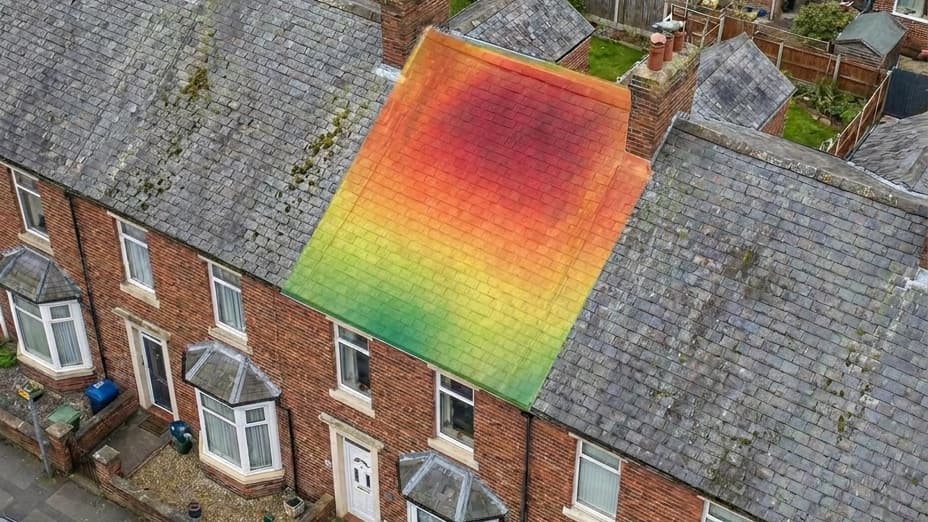
The Renewable Robin roof scan uses crystal clear satellite images of your actual roof to build a report with costs and saving estimates specific to your home. It also shows what your roof could earn you tax free through the Smart Export Guarantee (SEG) if you choose to sign up for it.
You enter your address. The tool does the rest.
It’s not working from a national average or a postcode-level guess. It scans the roof above your head, reads the pitch, the orientation and the real surface area, and builds a figure from that. Within about two minutes the estimate is on your screen: the projected installation cost, the estimated annual saving and the payback period in plain numbers.
No phone call required. No appointment to book unless you want one. No salesperson waiting at the end for your answer. And you can take those numbers away and share them with your partner, so the two of you can look at them together later.
But it doesn’t stop there. Anyone who wants one can also ask for a full, detailed solar proposal that lays everything out end to end, every fact and figure you could need to decide whether solar is right for you.
That’s the whole process. A roof-specific estimate in about two minutes, no strings attached.
See the real cost and saving estimate for your own roof.
Get My Free Roof Scan Estimate2 minutes · Free · No home visitThe Part Most Solar Companies Leave Out
There’s something else Renewable Robin does that sets them apart from everyone else.
If your home shows red flags for solar, heavy shading, big trees, a roof facing the wrong way, they tell you straight. No workaround that still ends in a sale. Just an honest answer, because there’s no point pulling someone through a sales process their roof doesn’t justify.
The founders say honesty and transparency are the cornerstones Renewable Robin was built on, and it shows in that policy. It’s rare in an industry that runs on commissions and home visits. It also matters, because it’s what makes every other number they give you worth trusting. A company willing to turn away a sale when the figures don’t justify it is a company whose estimate carries real weight when the figures do.
What the Numbers Look Like for a Typical Home
Here’s the financial picture for a standard installation through Renewable Robin, based on current electricity prices.
A 12 to 14 panel solar and battery system, installed for around £9,000.
Annual savings of around £1,000, made up of bills you no longer pay plus tax-free payments for the power you export through the Smart Export Guarantee once you’ve signed up.
A payback period of around nine years. Then 16 more years of savings on the other side of it, backed by a 25-year panel guarantee.
Run it in plain terms. You put in around £9,000. You get roughly £1,000 back every year. After nine years the system has paid for itself entirely. A household that installs this year and stays put for the panels’ 25-year guaranteed life recovers the full investment and then saves around another £16,000 on top, at today’s saving figures, all tax free, all generated from their own roof.
And because you own the system outright, any uplift in the property’s value when you come to sell belongs entirely to you. No lease, no ongoing payment to a third party, no small print about who owns the equipment at the end of a fixed term. The system belongs to your home, and it pays you back for the next 25 years.
The VAT Window That Closes in March 2027
Solar installations in the UK currently qualify for 0% VAT, and that rate runs until March 2027.
This isn’t a countdown timer placed there to create urgency. It’s government policy with a fixed end date, and on a purchase this size the VAT difference is no rounding error.
Whether that changes your timing is a decision for you to make. But it’s a fact worth having in front of you before you set the research aside for another few months.
The Emailed Estimate and the Conversation It Makes Easier
One detail of Renewable Robin’s process that’s easy to miss but useful in practice: the emailed estimate is built to be shared.
Most decisions this size involve two people. One does the research, the other has questions, and both need to see the same numbers before anything moves forward. The emailed copy means you’re not trying to relay figures from memory over dinner. And if you opt in for the free proposal, you get a live link the two of you can open and read together, at your own kitchen table, with no sales guy tapping away on his laminated folder.
That’s how a decision like this should happen. Between the two people whose money it actually is. Renewable Robin’s process is built around that, rather than against it.
The Installers Behind the Estimate
The scan starts the process. The company behind it is worth understanding too.
MCS, the Microgeneration Certification Scheme, is the accreditation that matters for the quality of the installation and for eligibility for government-backed incentives. It’s a verified standard with real accountability behind it, not a marketing badge. Ask any installer for their MCS number before you sign.
Working with one local installer also means one name is answerable for the whole job, from the estimate to the day the panels go on your roof. One local company, one point of contact. Not a national call centre or a subcontractor you’ve never met. For something that will sit on your home for 25 years, that accountability is not a minor point.
What You Walk Away With After Two Minutes
The scan gives you the things the industry has made surprisingly hard to find.
A genuine cost estimate based on your actual roof, not a national average, not a range. A clear annual saving, so you know what the system puts back in your pocket each year. The payback period in plain numbers, with no maths homework. An emailed copy to review in your own time and share with your partner. The option of that full proposal with every fact and figure laid out. And a straight answer if your roof shows red flags.
All of it without ringing anyone, without being forced to book an appointment just to see some figures, and without your phone getting blasted by five other solar installers.
Two Options From Here
You can keep waiting. Wait for energy prices to settle, wait until you have more time to research it properly, and accept that the number you need won’t arrive until a salesperson is already sitting across from you.
Or you can run the Renewable Robin roof scan. Enter your address, let the satellite do the work, and see a real cost and saving estimate for your specific roof in about two minutes. Read it in your own time. Share it with your partner. Make the call together, with no one pushing and no one waiting on your answer.
The 0% VAT rate runs until March 2027. The savings after payback run for 16 years. The panels are guaranteed for 25.
The only thing waiting changes is how many more months you spend paying full energy bills, while the number that would have told you otherwise was two minutes away.
The scan is free and takes about two minutes.
Get your free, no-hassle solar estimate for your own roof.
Start My Free Roof Scan2 minutes · Free · No home visit